Dhaka Moves Fast as India Gains Tariff Edge
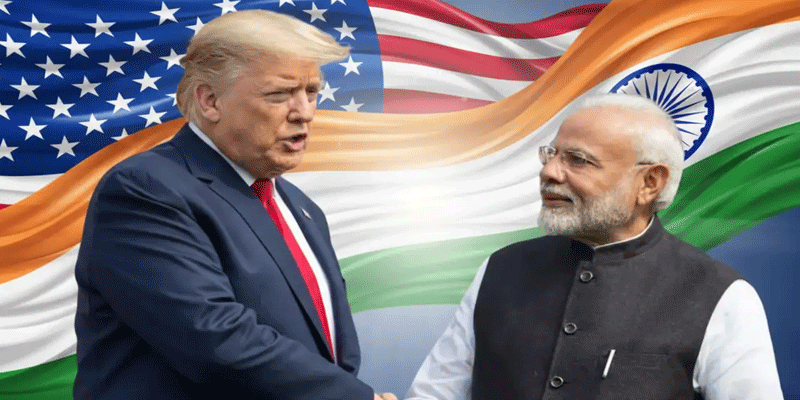
Bangladesh is racing to secure what officials describe as a discreet trade arrangement with Washington after India clinched a major tariff reduction from the United States. The urgency reflects mounting anxiety in Dhaka that India’s new preferential access to the US market—especially in labour-intensive exports—could redirect orders and investment away from Bangladesh. With elections approaching and its export sector under strain, Bangladesh is pushing for swift concessions to protect its competitiveness.
A Shifting South Asian Trade Landscape
The recalibration of US tariffs on Indian goods has altered competitive dynamics across South Asia. India’s improved market access has strengthened its position in sectors such as textiles, apparel, and light manufacturing—areas where Bangladesh has traditionally held a strong foothold in the US. As global buyers adjust sourcing strategies in response to tariff changes, Bangladesh faces the prospect of losing price advantages that have underpinned its export-driven growth for decades.
Tariff Reductions Bangladesh Is Seeking
Bangladesh’s primary objective is a reduction in US tariffs on its exports, particularly ready-made garments (RMG), which dominate its trade with America. Officials are reportedly seeking to lower the existing tariff burden—currently around 20% on many exports—to a level closer to that granted to India. Even a modest cut of several percentage points could help Bangladeshi products remain competitive in price-sensitive US retail markets.
Another key demand involves preferential treatment for garments manufactured using American cotton. Dhaka has proposed duty-free or reduced-duty access for such products, aligning its textile supply chain more closely with US agricultural exports. This approach would allow Bangladesh to offset tariff disadvantages while strengthening bilateral trade linkages.
Beyond apparel, Bangladesh is also exploring broader concessions on select industrial goods and seeking predictable trade rules that would reduce uncertainty for exporters. In exchange, Dhaka has signalled willingness to expand imports of US commodities and technology, aiming to present the deal as mutually beneficial.
What Bangladesh Risks Losing After the India–US Deal
India’s improved tariff position poses direct challenges to Bangladesh’s export model. The RMG sector—responsible for the bulk of Bangladesh’s shipments to the US and employing millions of workers—faces intensified competition as Indian manufacturers gain a pricing advantage. Even small shifts in tariff differentials can influence sourcing decisions by global brands, potentially redirecting orders to Indian factories.
Such a shift could lead to reduced factory utilisation, slower export growth, and job losses in Bangladesh’s labour-intensive manufacturing sector. The broader economy could feel the impact, given the industry’s contribution to GDP and foreign exchange earnings. Additionally, India’s strengthened trade ties with the US may attract new investment into its textile and manufacturing supply chains, further eroding Bangladesh’s relative advantage.
There are also geopolitical implications. If Bangladesh fails to secure comparable concessions, it risks marginalisation in regional trade dynamics shaped increasingly by bilateral deals. Conversely, concessions from Washington could help maintain balance and sustain Bangladesh’s role as a major garment exporter.
A Race to Retain Competitiveness
Bangladesh’s push for a swift understanding with the United States reflects the high stakes of shifting tariff regimes in South Asia. India’s recent gains have redrawn competitive lines, compelling Dhaka to seek parity to safeguard jobs and exports. Whether Bangladesh secures meaningful tariff relief will determine its ability to maintain market share in the US and sustain its manufacturing-led growth. The outcome will not only shape bilateral trade ties but also influence the broader regional balance in global supply chains.
(With agency inputs)